
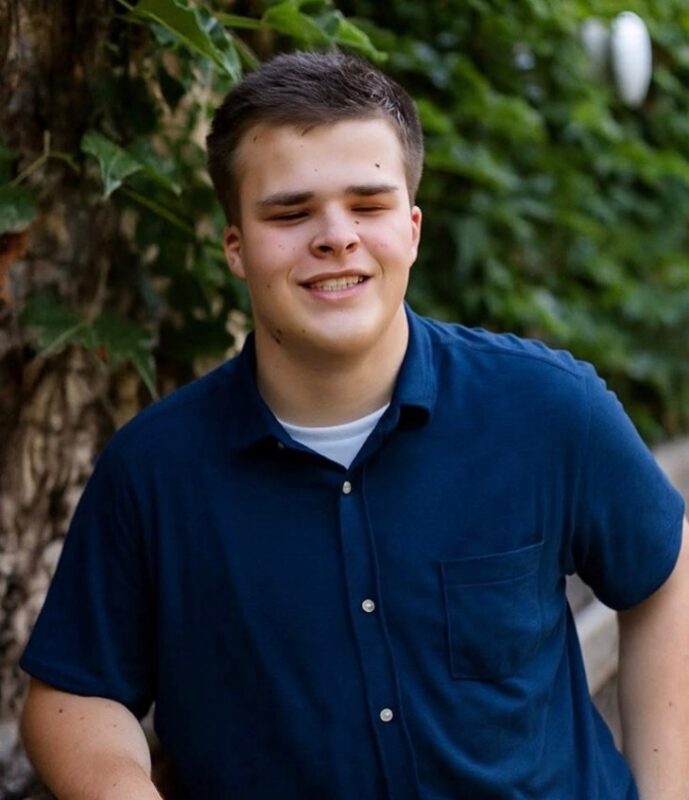
Bennett Lehman
2026 Council Scholarship recipient Bennett Lehman of Jefferson says his friends usually hang out by playing video games like Minecraft. But as his Axenfeld-Riger syndrome progressed and his vision declined, Bennett says it became hard to continue playing with his friends. Not wanting to give up on an important hobby, Bennett put his coding skills to work and soon joined an online collective of other programmers to create a “mod” of the game that allowed blind and low vision gamers to play using narration and audio cues.
“I really believe in accessibility in video games, because for my generation, video games are such a big point of connection between people,” Bennett says. “Helping people with vision loss do something that is seen as a very visual activity is so exciting. Coding started out as a hobby, so it’s cool to hear that it’s helping people do something they didn’t know they could.”
Bennett will start his freshman semester at UW-Whitewater in the fall, studying Cyber Security with a minor in Computer Science. He says he’s always had a passion for coding, but accessibility has been an issue. The BBC Micro:bit was a great beginner-level tool to teach people how to code, he says, but it was too visual for coders with vision loss. Bennett joined a team at Lancaster University to help the company find a way to make the device accessible to blind and low vision users. He says their recent accessibility launch has been a success.
“When I was young, there weren’t a lot of options out there that had the accessibility I needed,” Bennett says. “Now I’ve been able to help give other people the opportunity to learn to code.”
Bennett says he’s sought out ways to make more than just the digital world accessible. After a chance meeting with a representative of the Milwaukee Public Museum, Bennett had the opportunity to help create audio-described tours for the museum.
“They asked me things like what’s important to include in an audio description, and whether the narration should be professional or in character with the exhibit,” Bennett says. “It was really exciting, because I’ve always really loved the Milwaukee Public Museum. There’s a lot of stuff that’s behind glass or up high that can be hard to see for someone with vision loss. I joined a small group to help draft a script and plan out how the audio tours would sound.”
Bennett says he is grateful to be selected for a Council Scholarship, which he plans on putting toward his tuition. The Council has been awarding scholarships to postsecondary students who are blind or low vision for decades. You can find more information about our scholarship program at WCBlind.org/Events/Scholarships.