
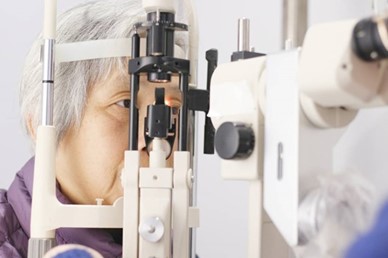
Just as it’s important to see a vision rehabilitation professional when you begin to experience vision loss, it’s equally important to see an ophthalmologist regularly to ensure that you are getting the most out of your vision. An ophthalmologist is a medical doctor with advanced training in extensive eye and vision care who can diagnose and treat the full range of eye diseases. It’s important to have a team of care providers that includes both an ophthalmologist and a vision rehabilitation professional.
Regular eye exams by an ophthalmologist are critical to addressing eye diseases in a timely manner. It may be possible to begin treating an eye disease before you even notice changes in your vision. Conditions like age-related macular degeneration, ocular melanoma and glaucoma can be diagnosed before your vision is impacted. By evaluating your personal risks for eye disease from factors like age and family history, an ophthalmologist can develop a schedule for eye screenings and guide you through healthy lifestyle choices that can help preserve your vision as much as possible.
It is vital to visit your ophthalmologist as soon as you notice any changes in your vision. Eye infections can lead to blindness if left untreated for too long. Sudden blurriness can be related to cataracts, age-related macular degeneration or other diseases. Floaters or new flashes in your vision could be caused by a retinal detachment. If you suffer an eye injury, such as getting hit by a projectile or splashing a harmful fluid in your eyes, seek emergency medical attention.
Even if you don’t have vision loss, regular visits with an ophthalmologist can be helpful. Women who are pregnant can develop eye conditions that can be diagnosed and treated. People with diabetes are at elevated risk for vision loss. Meeting regularly with your ophthalmologist and your diabetes health coach can help you protect your sight. An ophthalmologist can even help if you suffer from dry eye. They can pinpoint the exact cause and offer the appropriate treatment.
Ophthalmologists address the medical side of vision loss, diagnosing diseases and providing medical treatments. Vision rehabilitation professionals can address the wellbeing of the entire person and offer strategies and techniques for living as fully and independently as possible as you adjust to vision loss. The Council greatly values the relationships we have built with ophthalmologists over the years to ensure that people with vision loss can have all their needs addressed.
“When an ophthalmologist makes a referral to the Council, they will include some information about their patient’s diagnosis and level of vision loss so we know what to expect when the client comes through the door,” says Education & Vision Services Director Amy Wurf. “On the flip side, we can make a note of any changes to the person’s vision and advise them about when to go back to their ophthalmologist to manage their eye condition. By working as a team, we can make sure we are doing everything we can to help our clients.”
To learn more about the importance of ophthalmologists, check out this article from the American Academy of Ophthalmology.