
October is Medication Label Safety Month, a time to spotlight the importance of knowing what’s in our medication bottles. The U.S. Food and Drug Administration estimates that about 1.3 million people are injured from errors in taking medication every year. For the approximately 140,000 adults in Wisconsin who are blind or low vision, the risk of injury is very real, as they are unable to read the standard labels on their medication bottles. People with vision loss should take steps to have their medication labeled accessibly either at the pharmacy or at home so they can be sure they are taking their medication correctly.
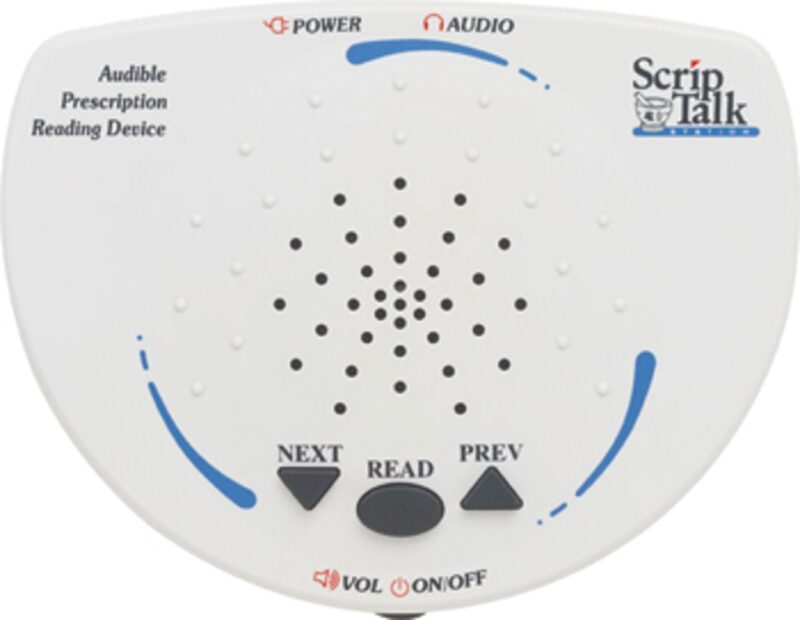
There are two popular resources for helping people who are blind or low vision know what’s in their medication bottles. ScripTalk is a free service that works with local pharmacies to provides audio labels containing all of the important information printed on the bottle. The labels can be read in multiple languages using a small companion device. ScripTalk labels can also be read using a smartphone app. In addition, ScripTalk can provide large print or braille bottle label options through their ScriptAbility program. ScripTalk is available at no cost at thousands of pharmacies across the country.
Accessible Pharmacy is a service that can ship medication right to your door with contracted braille labels on the bottles. They package your medication in a variety of ways, with easy-open or child-proof lids or monthly and weekly pre-sorted pill organizers, all with braille labels, free of charge. Accessible Pharmacy can also create large print labels and provide ScripTalk labels for the medications they provide. In addition to standard medication bottles, they can create braille labels for eye drops, insulin and vitamin bottles.
There are ways you can make your medication bottles accessible at home too. Placing tactile markers like puff paint or bump dots on the lids of bottles will let you quickly tell which medication is which. You can even keep the lids you’ve marked and switch them to the new bottle when you refill your medication. Another option is to wrap rubber bands around the bottles, with different numbers of rubber bands indicating how many times a day each medication should be taken. You can learn more about tactile labeling from this video we recently produced.
The Sharper Vision Store carries several home labeling options available, including both bump dots and puff paint. For braille users, the 3M Braille Labeler can help you create your own braille labels that you can place on medication bottles. If you prefer a more high-tech option, the PenFriend lets you create audio labels that you can record yourself. The PenFriend will read it back to you when you press it onto the label. You can find these and other labeling tools online at Store.WCBlind.org/Store/Labeling.
If you are blind or low vision, talk to your pharmacist about ways to make your medication labels accessible to you. Share with them the statistics on medication errors and explain how the small text on the bottle can be difficult or impossible for people with vision loss to read. Tell them how important this is for your well-being and independence. Keep your conversation short and polite and find productive ways to work with the pharmacy. The more we talk with medical professionals about the importance of accessible labels, the more likely it will be that they are offered to everyone who need them.