
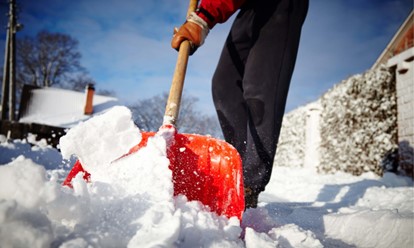
Winter is here, and with it comes snow- and ice-covered sidewalks that become a hazard for all pedestrians. That hazard is especially true for older adults, people who are blind or low vision and people with other disabilities who do not drive and need the sidewalks they use to be clear and safe. But too often, sidewalks are neglected after a snowstorm, creating a patchwork of safe and unsafe walking conditions across a pedestrian’s entire route. You have a right to reach out and ask for safe sidewalks in your neighborhood so that you can safely get to any destination in your community.
“Many people with disabilities, including people who are blind or low vision, are nondrivers and must walk to get to their destinations,” says Council Executive Director Denise Jess. “Walking also gives us freedom and personal agency over our lives. Well maintained sidewalks and open curb ramps give us access and mobility in addition to safety.”
Pedestrians have just as much a right to safely move through their communities as drivers do. It is the responsibility of businesses and homeowners to ensure that their sidewalks are cleared for pedestrian travel. Falling on uneven or uncleared sidewalks can cause significant and lasting injuries, especially for older adults. Wisconsin has one of the highest fall death rates in the country. When older adults or people with disabilities are hesitant to leave their homes due to fear of falling on unsafe sidewalks, they often end up staying home and becoming increasingly isolated. Depression and loneliness are already more prevalent among people with disabilities than among the general population.
If you own a home or business that has a sidewalk, make sure you clear it fully as soon as reasonably possible. Not only should you make sure the sidewalks are free of snow and ice, but if you are on a street corner you must also clear the curb ramp, or the ramp that connects the sidewalk to the street. Make sure the sidewalks are clear enough for everyone, including wheelchair and white cane users. When you are diligent about snow removal, you are making your neighborhood safer and more welcoming for everyone in your community.
If you have vision loss or another disability and notice icy and snow-covered sidewalks in your neighborhood, your first step should be to let the home or business owner know. If you know your neighbors, try talking with them about the issue. Tell them how the issue affects you and give them a concrete ask, like “could you please salt that icy patch on your sidewalk.” Explaining that you need safe sidewalks to move throughout your community can help your neighbors understand why prompt snow removal is important. They may not even know that there is a problem. If you don’t know your neighbors or are uncomfortable talking to them, you can leave a note in their mailbox instead.
If the sidewalks still aren’t reliably cleared after talking to your neighbors, then you should talk with your city officials. In most places, the homeowner has a legal obligation to clear sidewalks properly within a certain timeframe after a snowfall. The exact office or person responsible for sidewalk enforcement varies from town to town. If you don’t know exactly who to contact, start by raising the issue with your alderperson or other local elected official. They can help you find where to start the process.
Older adults and people with disabilities have a right to get to where they need to go, and snowy weather does not take away that right. When sidewalks are clear and safe, the entire community benefits.