
Summary
For decades, people have been coming to the Council in search of vision services to help them stay as independent as possible. But there are times when our Vision Services team meets with someone and finds they have greater needs than we can address.
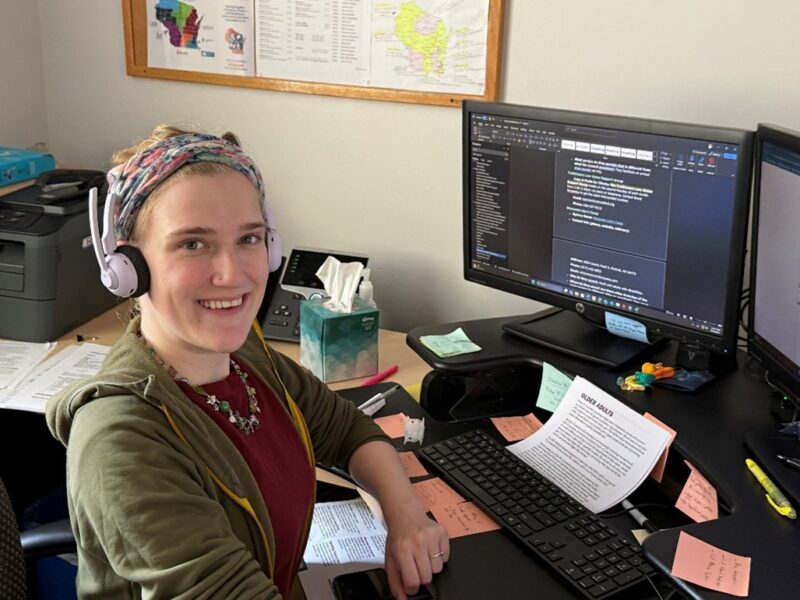
Vision Services Navigator Kate Bleyl-Ericson
For decades, people have been coming to the Council in search of vision services to help them stay as independent as possible. But there are times when our Vision Services team meets with someone and finds they have greater needs than we can address. It’s not uncommon for our team to discover that a client is facing food insecurity, imminent eviction from their home, or other issues we are not properly equipped to help with. People who are blind or low vision have high rates of poverty and unemployment and are more likely to experience negative health outcomes than people without vision loss, which can contribute to those challenges.
To address these unmet needs, the Council hired Kate Bleyl-Ericson earlier this year to fill the newly created position of vision services navigator. The navigator provides a more person-centered experience for those reaching out to the Council, enabling our team to gain a fuller understanding of how we can best support the individual.
While we had a short intake process before, our intakes are now more comprehensive and explore the entire lives of our clients. The process begins with questions about vision, but also includes demographic questions and more general questions about the client’s quality of life. If the client has additional needs that the Council cannot address adequately, Kate can help them find the right services for their needs. Kate has developed a comprehensive directory of resources and organizations available for a variety of needs the client may have. Using this directory, Kate can pick the best options available to address the client’s needs. When Kate is not conducting intakes, they’re talking with these organizations to create connections and build a deeper knowledge of how their services can help our clients.
Kate says that outside of vision services, the biggest needs that come up are food insecurity, isolation and transportation. “It can be hard to know what you need when you’re facing more than one hardship at one time,” Kate says. “My job is to help people identify what they need and to point them toward the resources they need to address those needs, whether that’s within or outside the Council.”
Kate is also gathering important demographic information to help us better understand the population we serve and which communities we need to work harder to reach. This data includes things like the client’s age, gender, racial and ethnic backgrounds and income levels.
The addition of the navigator role is also benefitting other members of the Vision Services team, who no longer have to conduct intakes themselves and can focus more of their attention on providing the services they specialize in. “We aren’t really trained to know exactly how to help people facing things like food insecurity,” Amy says. “Kate knows where someone should go to get services. Now, we can get right to providing training to people to help them live their lives safely and independently.”
Most importantly, the navigator is making a major difference in the lives of our clients. Madison resident Dawn Rhodes originally reached out to the Council to inquire about magnifiers but was also interested in vision rehabilitation therapy to live more independently in her home. During the intake process, Kate discovered that Dawn could also benefit from other services available in Dane County. Kate worked with Dawn to connect her with a food pantry that can deliver food directly to her door. Dawn was also made aware of other local disability advocacy groups.
“Kate’s been very good about showing me all these different programs,” Dawn says. “Kate has helped me find new ways to be proactive in the community. They’ve been fantastic and have a great attitude!”
We are excited to see how the addition of the navigator role continues to improve our ability to address our clients’ needs as comprehensively as possible.