
It can be easy to feel as if you are alone after losing your vision. According to a study from the National Institutes of Health, people with disabilities experience loneliness and social isolation at significantly higher rates than people without a disability. But it’s important to remember that you are not alone. You can still be active in your community, and there are many steps you can take to reduce your social isolation.
“There can be a lot of reasons why someone who is blind or low vision may feel isolated,” says Education & Vision Services Director Amy Wurf. “Transportation barriers, a lack of accessible information about activities, and self-consciousness can all keep someone from going out into their community. Reaching outside of yourself and finding a way to focus on something you enjoy rather than focusing on what you feel you cannot do is so important for your mental health.”
There are probably many structured social events happening in your community all the time. Most towns have a public library, and they often host book clubs and discussions, as well as other events like craft clubs and volunteer opportunities. The library can also help you get an audio version of the book being discussed if you are not yet set up with the Wisconsin Talking Book & Braille Library. Libraries are often in a central location, meaning it may be easier to find transportation to and from the event.
If your community has a senior center, they will also hold regular events for older adults, and many offer transportation options to make it easier to participate.
If you live in the Madison area, the nonprofit organization Arts for All holds art, music and dance classes specifically designed for people with disabilities. In the Milwaukee area, Blind Outdoor Leisure Development (BOLD) holds free events for people with vision loss to get outdoors while meeting new people.
There are a number of online structured social events happening regularly as well. The American Council of the Blind hosts dozens of online events every week. These groups cover everything from sports to cooking to religious events to birding. Hadley is another national organization that regularly hosts online meetups on a wide variety of topics. You can learn more about Hadley’s online discussion groups at HadleyHelps.org/Discussion-Groups.
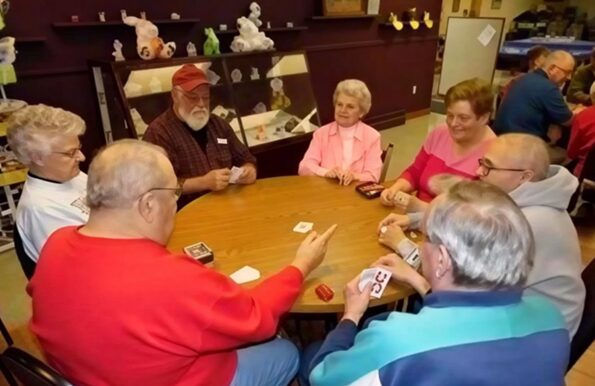
If you feel more comfortable in less structured, casual social settings, there are plenty of options available for you as well. Simply going for a walk in your community can help you get out and about and can be a great way to meet your neighbors. There may also be a more organized walking group in your community. Starting a card game group is a great way to stay connected with family and friends. The Sharper Vision Store has a number of accessible card and board games appropriate for various levels of vision loss. If your family and friends do not live with you, a computer, tablet or smartphone with FaceTime or WhatsApp can help you stay connected.
Speaking of technology, a smart speaker that uses Alexa or Google Home can help keep you company. For example, you can simply ask it for trivia questions or to play a podcast or audiobook. If you are signed up with the Wisconsin Talking Book & Braille Library, you’ll have access to the NFB-NEWSLINE, a free audio news service available to anyone who is blind, low vision or otherwise print disabled offering audio editions of many local and national newspapers.
In addition to helping you feel less isolated, getting out into the world benefits the entire blind and low vision community. A lot of the sighted population still clings to the myth that people with vision loss cannot live alone, travel or hold a job. “We strive to break that stereotype and educate people all the time in our work at the Council,” Amy says. “The perceptions of what people with vision loss can do, which is what anyone can do with adaptations, can be changed when someone is out there just living their life and going about their business. By getting out into the community, people act as ambassadors by reminding everyone that they exist and are part of society.”
If you need assistance in building the skills you need to feel comfortable in your community, the Council may be able to help. Contact our vision services team at [email protected] or fill out the Vision Services Request form at WCBlind.org/Vision-Services/Vision-Services-Requests.